
 EN
EN



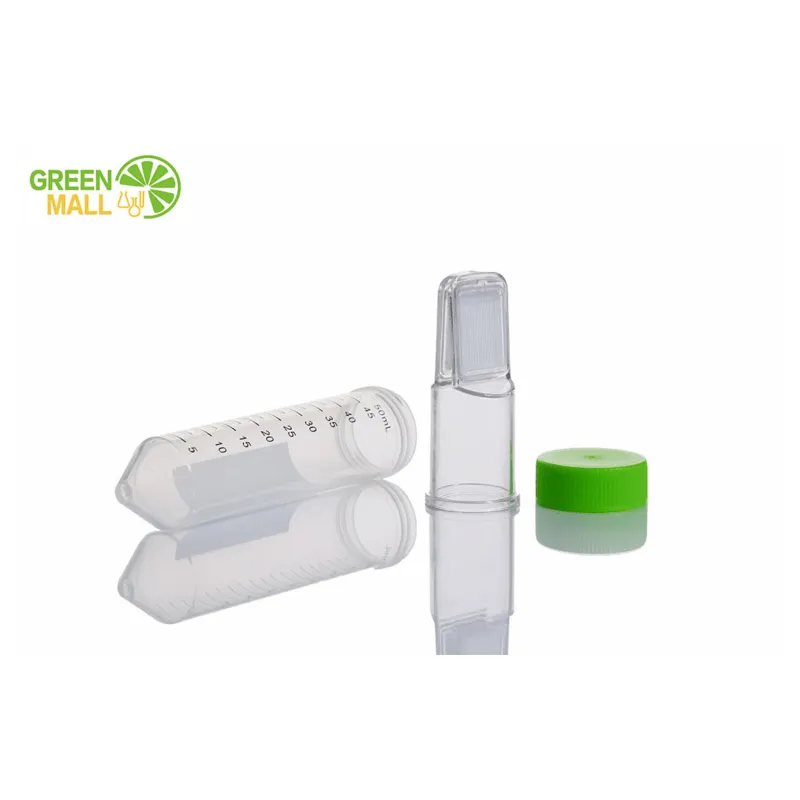
Selecting the appropriate molecular weight cut-off for your ultrafiltration tube is a critical decision that directly impacts the success of your protein concentration, buffer exchange, or sample preparation workflow. The MWCO value determines which molecules pass through the membrane and which are retained, making it the single most important specification to consider when choosing an ultrafiltration tube for your laboratory application. Understanding how to match MWCO to your target molecule size, purity requirements, and downstream analysis needs ensures optimal recovery, minimal sample loss, and reliable reproducible results across your research or quality control processes.

The ideal MWCO for your ultrafiltration tube depends on the molecular weight of your target analyte, the composition of your sample matrix, and the specific objectives of your separation process. While general guidelines exist, successful MWCO selection requires understanding the relationship between membrane pore size, target molecule retention, and contaminant removal efficiency. This article provides a systematic framework for determining the optimal MWCO for your specific application, covering the fundamental principles of membrane selectivity, practical selection criteria for different biomolecule types, and troubleshooting strategies when standard approaches do not deliver expected results.
Understanding MWCO and Its Role in Ultrafiltration Performance
Defining Molecular Weight Cut-Off in Practical Terms
The molecular weight cut-off of an ultrafiltration tube represents the nominal molecular weight at which approximately ninety percent of a solute with a specific molecular size is retained by the membrane during centrifugation. This specification is typically expressed in Daltons or kilodaltons and serves as a guideline rather than an absolute threshold. The MWCO does not represent a sharp cutoff point but rather a range where retention efficiency decreases gradually. Manufacturers determine MWCO values using globular protein standards under defined test conditions, which means actual retention behavior may vary depending on the shape, charge, and flexibility of your specific target molecule.
When working with an ultrafiltration tube, the membrane pore size correlates directly with the stated MWCO, creating a size-exclusion barrier that allows smaller molecules to pass through while concentrating larger molecules in the retentate. The relationship between pore size and MWCO is not linear because molecular retention depends on hydrodynamic radius rather than molecular weight alone. Elongated or flexible molecules may pass through membranes more easily than compact globular proteins of similar molecular weight. This variation explains why empirical testing is sometimes necessary to confirm that a particular MWCO provides adequate retention for your specific target molecule in your sample matrix.
Membrane Material and MWCO Precision
The membrane material used in your ultrafiltration tube significantly affects the precision and consistency of MWCO performance. Regenerated cellulose membranes offer low protein binding and consistent pore size distribution, making them suitable for applications requiring high recovery rates and predictable retention characteristics. Polyethersulfone membranes provide excellent chemical resistance and faster flow rates, though they may exhibit slightly higher protein binding in certain applications. The manufacturing process and quality control standards applied to membrane production directly influence how closely the actual retention profile matches the stated MWCO specification.
Surface properties of the membrane also interact with MWCO performance by influencing how molecules approach and interact with membrane pores. Hydrophilic membranes reduce protein adsorption and improve recovery but may allow some larger molecules to pass through if they adopt extended conformations. Membrane charge characteristics can create electrostatic interactions that either enhance or reduce retention efficiency beyond what molecular size alone would predict. Understanding these material-specific behaviors helps you anticipate when standard MWCO selection rules may require adjustment for your particular application and target molecule characteristics.
Determining the Optimal MWCO Based on Target Molecule Size
The One-Third to One-Half Rule for MWCO Selection
The most widely applied guideline for selecting an ultrafiltration tube MWCO is to choose a cutoff value that is one-third to one-half the molecular weight of your target protein or biomolecule. This conservative approach maximizes retention efficiency while still allowing smaller contaminants and buffer components to pass through effectively. For example, if you are concentrating a protein with a molecular weight of thirty kilodaltons, selecting an ultrafiltration tube with a ten kilodalton MWCO would provide reliable retention while efficiently removing salts, small peptides, and other low-molecular-weight impurities from your sample.
This ratio-based selection method accounts for the variability in molecular shape and the statistical nature of MWCO specifications. By choosing an MWCO significantly lower than your target molecular weight, you create a safety margin that compensates for molecules that may adopt extended conformations or for slight variations in membrane pore size distribution. The one-third to one-half rule works particularly well for globular proteins with compact tertiary structures. However, this guideline may need adjustment when working with highly elongated proteins, flexible peptides, nucleic acids, or molecules with unusual shapes that do not match the globular protein standards used to define MWCO values.
Adjusting MWCO for Non-Globular Biomolecules
Nucleic acids, linear peptides, and intrinsically disordered proteins require modified MWCO selection strategies because their hydrodynamic behavior differs substantially from globular proteins. DNA and RNA molecules have extended double-helix or single-strand conformations that create larger effective hydrodynamic radii than globular proteins of equivalent molecular weight. When concentrating nucleic acids using an ultrafiltration tube, you may need to select an MWCO that is one-fifth to one-tenth of the molecular weight to ensure adequate retention. A thirty kilobase DNA fragment might require a three kilodalton or even lower MWCO for effective concentration, depending on whether the nucleic acid is double-stranded, single-stranded, or complexed with proteins.
Flexible peptides and protein fragments lacking stable tertiary structure can thread through membrane pores more easily than folded proteins, necessitating lower MWCO values than the standard guidelines would suggest. Detergent micelles, lipid vesicles, and protein complexes present additional challenges because their effective size depends on aggregation state and solution conditions. Temperature, ionic strength, pH, and the presence of chaotropic agents or reducing agents can all alter molecular conformation and consequently affect retention behavior. When working with these non-standard biomolecules, pilot testing with multiple MWCO values is often necessary to identify the optimal ultrafiltration tube specification for your specific application requirements.
Sample Complexity and Contaminant Removal Considerations
The composition of your sample matrix influences MWCO selection by determining which contaminants must be removed and which components must be retained. When your primary goal is to remove low-molecular-weight contaminants such as salts, detergents, or small molecule inhibitors while retaining a target protein, choosing an MWCO well below the target molecular weight ensures efficient buffer exchange. However, if your sample contains multiple proteins or biomolecules with a range of molecular weights, MWCO selection becomes a compromise between retaining desired components and removing unwanted species.
Complex biological samples such as cell lysates, serum, or culture supernatants contain diverse molecular species that may foul the membrane or compete for retention. In these situations, the optimal MWCO for your ultrafiltration tube balances several competing factors including target retention, contaminant clearance, membrane fouling resistance, and processing time. Selecting an MWCO that is too low may result in slow filtration rates due to pore blockage by intermediate-sized molecules. Conversely, an MWCO that is too high may allow partial loss of your target molecule or inadequate removal of interfering substances. Pre-clarification steps, sample dilution, or sequential filtration with multiple MWCO values may be necessary for challenging samples where a single ultrafiltration tube specification cannot achieve all purification objectives simultaneously.
Application-Specific MWCO Selection Strategies
Protein Concentration and Buffer Exchange Applications
Protein concentration represents the most common application for ultrafiltration tube technology, and MWCO selection directly determines concentration efficiency and final recovery yield. For monoclonal antibodies and immunoglobulin preparations with molecular weights around one hundred fifty kilodaltons, a thirty kilodalton or fifty kilodalton MWCO ultrafiltration tube provides excellent retention while allowing rapid buffer exchange. Smaller proteins such as enzymes, cytokines, or growth factors in the ten to fifty kilodalton range typically require ten kilodalton or three kilodalton MWCO membranes depending on whether complete retention or slight molecular weight fractionation is desired.
Buffer exchange efficiency depends on the MWCO providing adequate retention while maintaining reasonable flow rates through the membrane. An ultrafiltration tube with an MWCO too close to the target protein molecular weight may result in partial protein loss through the membrane, particularly during the later stages of concentration when protein concentration in the retentate increases. Conversely, an excessively low MWCO may slow the filtration process and increase the number of dilution and concentration cycles required for complete buffer exchange. For most protein buffer exchange applications, achieving at least ten-fold volume reduction allows effective replacement of the original buffer while maintaining protein recovery above ninety-five percent when the appropriate MWCO is selected.
Desalting and Small Molecule Removal
Removing salts, nucleotides, reducing agents, or other small molecules from protein samples requires an ultrafiltration tube MWCO that retains the protein while allowing free passage of contaminants. The molecular weight difference between typical proteins and small molecules is sufficiently large that MWCO selection is relatively straightforward for desalting applications. A three kilodalton MWCO ultrafiltration tube effectively retains proteins above ten kilodaltons while allowing quantitative removal of salts, glycerol, imidazole, and other buffer components with molecular weights below five hundred Daltons.
The efficiency of small molecule removal depends on both the MWCO selection and the washing protocol employed. Multiple dilution and concentration cycles improve contaminant clearance, with each cycle reducing residual small molecule concentration by a factor equal to the dilution ratio. For complete removal of small molecules, three to five washing cycles with an appropriate MWCO ultrafiltration tube typically achieve contaminant reduction of ninety-nine percent or greater. The membrane must provide complete retention of the target protein throughout multiple concentration cycles, making conservative MWCO selection particularly important for desalting applications where repeated processing could accumulate small losses into significant overall yield reduction.
Viral Particle and Nanoparticle Processing
Viral vectors, virus-like particles, and engineered nanoparticles require specialized MWCO considerations because their effective molecular weights often exceed the upper range of standard ultrafiltration tube membranes. Adeno-associated viruses with molecular weights around three to five megadaltons require ultrafiltration tube membranes with MWCO values of one hundred kilodaltons or higher to achieve retention. Larger viral particles such as lentiviruses or adenoviruses may require membranes approaching the boundary between ultrafiltration and microfiltration, with MWCO specifications of three hundred kilodaltons to one thousand kilodaltons.
Nanoparticle concentration using an ultrafiltration tube must account for particle aggregation state, surface coating properties, and interaction with the membrane material. Protein-coated nanoparticles, lipid nanoparticles, and polymer-drug conjugates may exhibit retention behavior that differs from predictions based solely on particle size due to surface chemistry effects. The goal in these applications is typically to concentrate the particles while removing free protein, excess stabilizers, or unreacted reagents. MWCO selection must balance particle retention against efficient removal of smaller species, often requiring empirical testing to identify the optimal specification for your specific particle formulation and processing requirements.
Troubleshooting MWCO Selection and Optimizing Performance
Diagnosing Unexpected Target Molecule Loss
When your ultrafiltration tube appears to lose target molecule through the membrane despite selecting an MWCO well below the theoretical molecular weight, several factors may be responsible. Protein aggregation or degradation can create smaller fragments that pass through the membrane, particularly if your sample has been subjected to freeze-thaw cycles, prolonged storage, or harsh purification conditions. Verifying the integrity and aggregation state of your target molecule using analytical techniques such as size exclusion chromatography or dynamic light scattering helps determine whether molecular weight changes explain the unexpected loss.
Membrane adsorption represents another common cause of apparent target loss, particularly with hydrophobic proteins or at very low protein concentrations where surface interactions become significant relative to the total protein mass. Pre-wetting the ultrafiltration tube membrane with a protein-containing solution or adding a small amount of non-ionic detergent to your sample can reduce adsorptive losses. If loss continues despite these measures, testing an ultrafiltration tube with a lower MWCO may be necessary, even if it violates the standard one-third rule. Some proteins with unusual shapes or high flexibility require more conservative MWCO selection than globular protein standards would suggest.
Addressing Slow Filtration Rates
Slow filtration through your ultrafiltration tube indicates membrane fouling, excessive sample viscosity, or MWCO selection that is too restrictive for your sample composition. Complex samples containing lipids, nucleic acids, or particulates can clog membrane pores and dramatically reduce flow rates as concentration proceeds. Pre-clarifying your sample by centrifugation or filtration through a coarser membrane removes particulates that would otherwise accumulate on the ultrafiltration tube membrane surface. Diluting highly viscous samples or working at lower initial protein concentrations may improve flow rates, though this requires additional processing time for the same final concentration factor.
If slow filtration persists despite sample pre-treatment, testing an ultrafiltration tube with a higher MWCO may improve processing speed while still providing adequate retention. The relationship between MWCO and flow rate is not linear, and increasing from a three kilodalton to a ten kilodalton membrane can substantially improve filtration speed with minimal impact on retention for proteins above thirty kilodaltons. Temperature also affects filtration rate, with processing at room temperature typically providing faster flow than cold room operation due to reduced viscosity. However, temperature selection must balance processing speed against protein stability requirements for your specific target molecule.
Managing Concentration Polarization Effects
Concentration polarization occurs when retained molecules accumulate at the membrane surface of your ultrafiltration tube, creating a localized high-concentration layer that reduces effective pore size and slows filtration. This phenomenon becomes more pronounced as concentration increases and can lead to apparent changes in retention characteristics during processing. Periodic gentle mixing or inversion of the ultrafiltration tube during centrifugation interrupts concentration polarization by redistributing accumulated protein away from the membrane surface. However, excessive agitation may cause foaming or protein denaturation for sensitive molecules.
The centrifugation speed used with your ultrafiltration tube influences the balance between filtration rate and concentration polarization. Higher centrifugal forces increase flow rate but also compress the polarization layer more tightly against the membrane, potentially reducing overall efficiency. Most ultrafiltration tube protocols recommend centrifugation speeds between three thousand and seven thousand times gravity, with optimal speed depending on sample viscosity, protein concentration, and MWCO. If concentration polarization significantly impacts your process, working at lower concentration factors, processing smaller sample volumes, or using an ultrafiltration tube with larger membrane area can improve results without requiring MWCO modification.
Advanced Considerations for Specialized Applications
Working with Membrane-Incompatible Buffers
Certain buffer components and solvents affect membrane integrity and alter the effective MWCO of your ultrafiltration tube. Strong acids, bases, organic solvents, and oxidizing agents can damage regenerated cellulose membranes, while polyethersulfone membranes offer greater chemical resistance but may exhibit increased protein binding under certain conditions. When your application requires buffers containing significant concentrations of organic solvents, detergents, or extreme pH values, selecting an ultrafiltration tube with appropriate membrane chemistry is as important as choosing the correct MWCO.
Membrane swelling or shrinkage in response to buffer composition can effectively alter MWCO by changing pore dimensions. High concentrations of chaotropic agents such as urea or guanidinium chloride cause membrane swelling that may increase the effective MWCO, potentially allowing target molecule loss. Conversely, some buffer components cause membrane contraction that reduces effective pore size and may slow filtration rates. When working with non-standard buffers, consulting manufacturer compatibility charts and conducting small-scale retention tests with your specific buffer composition ensures that the selected MWCO performs as expected under your actual operating conditions.
Scaling Considerations from Research to Production
MWCO selection principles established with small-volume research-scale ultrafiltration tubes generally transfer to larger processing volumes, but some adjustments may be necessary. Membrane performance characteristics, including MWCO precision and fouling resistance, can vary between different membrane formats and manufacturers. When scaling up, maintaining the same membrane chemistry and manufacturer ensures consistent retention behavior. However, larger membrane areas and different device geometries may affect concentration polarization, processing time, and optimal centrifugation conditions.
Production-scale ultrafiltration processes typically use stirred cells or tangential flow filtration systems rather than centrifugal ultrafiltration tubes, but MWCO selection principles remain consistent across formats. The dynamic conditions in tangential flow systems reduce concentration polarization compared to dead-end filtration in centrifugal devices, potentially allowing use of MWCO values closer to the target molecule molecular weight. However, the fundamental relationship between MWCO and retention efficiency holds regardless of device format. Conducting parallel small-scale tests with research ultrafiltration tubes and production-scale equipment using identical MWCO values validates whether additional optimization is needed during scale-up.
Quality Control and Batch-to-Batch Consistency
Maintaining consistent results across multiple experiments or production batches requires attention to ultrafiltration tube quality and proper storage conditions. Membranes can degrade over time if exposed to temperature extremes, humidity, or contamination, potentially altering MWCO characteristics. Using ultrafiltration tubes from single manufacturing lots for critical applications minimizes variability from batch-to-batch differences in membrane production. Storing devices in sealed packaging at controlled temperature and humidity preserves membrane performance until use.
Implementing retention verification protocols ensures that your ultrafiltration tube continues to perform according to specifications. Processing control samples with known molecular weight standards alongside experimental samples provides real-time confirmation that the MWCO is functioning as expected. Measuring target molecule concentration in both retentate and filtrate allows calculation of actual retention efficiency and early detection of membrane performance issues. These quality control measures are particularly important in regulated environments such as pharmaceutical manufacturing or clinical sample processing where documentation of consistent ultrafiltration tube performance supports overall process validation and product quality assurance.
FAQ
What happens if I choose an MWCO that is too close to my target protein molecular weight?
Selecting an ultrafiltration tube MWCO too close to your target protein molecular weight typically results in partial protein loss through the membrane, reducing overall recovery yield. The retention efficiency decreases substantially when the MWCO approaches the target molecular weight because the membrane specification represents a statistical retention rate rather than an absolute cutoff. Additionally, proteins with extended conformations or flexibility may pass through pores more easily than the globular protein standards used to define MWCO suggest. To ensure reliable retention and high recovery, choose an MWCO that is one-third to one-half of your target protein molecular weight, creating adequate safety margin for shape variability and MWCO specification tolerances.
Can I use the same ultrafiltration tube MWCO for DNA and protein samples of similar molecular weight?
DNA and proteins of equivalent molecular weight require different MWCO selections because their physical conformations and hydrodynamic radii differ substantially. Nucleic acids adopt extended linear or double-helix structures that create larger effective sizes compared to compact globular proteins. An ultrafiltration tube MWCO suitable for a fifty kilodalton protein would likely allow significant loss of a fifty kilobase DNA fragment. When processing nucleic acids, select an MWCO that is one-fifth to one-tenth of the molecular weight rather than the one-third ratio appropriate for proteins. This more conservative selection accounts for the elongated shape of nucleic acids and ensures adequate retention during concentration or buffer exchange procedures.
How do I determine if membrane fouling or incorrect MWCO is causing slow filtration?
Distinguishing between membrane fouling and inappropriate MWCO selection requires systematic evaluation of your ultrafiltration tube performance. If filtration starts at a reasonable rate but slows dramatically as concentration proceeds, membrane fouling from sample components is the likely cause. Pre-clarifying your sample by centrifugation or using a coarser pre-filter can confirm fouling as the problem if these steps restore normal flow rates. Conversely, if filtration is slow from the beginning and remains consistently slow throughout processing, the MWCO may be too low for your sample composition. Testing an ultrafiltration tube with the next higher MWCO will reveal whether pore size limitation rather than fouling is responsible for slow processing, provided the higher MWCO still retains your target molecule adequately.
Should I adjust my MWCO selection when working at different protein concentrations?
The optimal ultrafiltration tube MWCO remains constant across different protein concentrations for a given target molecule, but processing behavior may change as concentration increases. At very high protein concentrations, increased viscosity and concentration polarization can slow filtration rates regardless of MWCO selection. However, the retention characteristics determined by MWCO and molecular weight relationships do not fundamentally change with concentration. If you experience processing difficulties at high concentrations, addressing viscosity through sample dilution or improved mixing is more appropriate than changing MWCO. The molecular weight cut-off should be selected based on your target molecule size using standard guidelines, then processing conditions such as centrifugation speed, temperature, and concentration factor should be optimized for your specific concentration range.
Table of Contents
- Understanding MWCO and Its Role in Ultrafiltration Performance
- Determining the Optimal MWCO Based on Target Molecule Size
- Application-Specific MWCO Selection Strategies
- Troubleshooting MWCO Selection and Optimizing Performance
- Advanced Considerations for Specialized Applications
-
FAQ
- What happens if I choose an MWCO that is too close to my target protein molecular weight?
- Can I use the same ultrafiltration tube MWCO for DNA and protein samples of similar molecular weight?
- How do I determine if membrane fouling or incorrect MWCO is causing slow filtration?
- Should I adjust my MWCO selection when working at different protein concentrations?