
 EN
EN



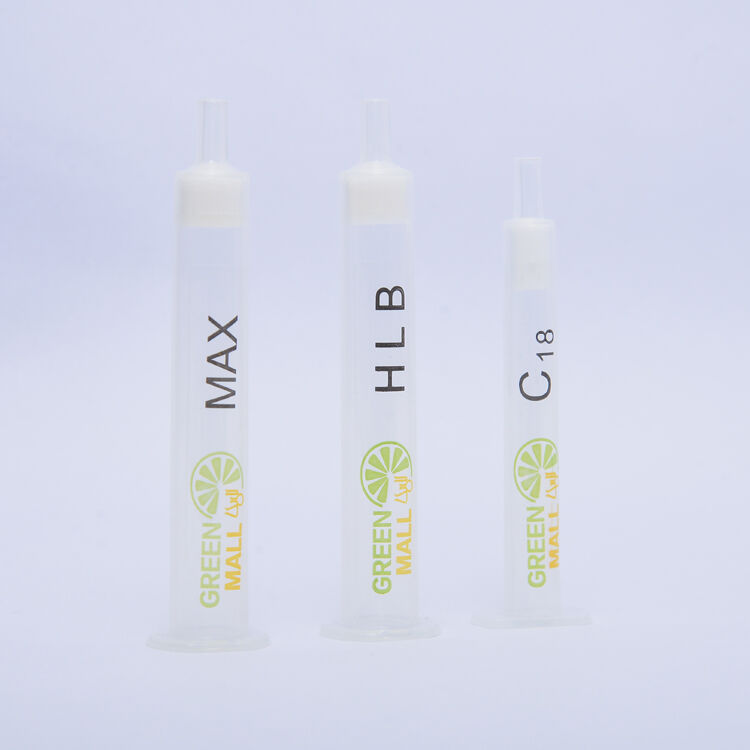
Solid Phase Extraction has revolutionized sample preparation in analytical laboratories worldwide. Modern analytical workflows demand precise, reliable, and efficient sample cleanup methods that can handle complex matrices while maintaining analyte integrity. The spe cartridge technology addresses these critical requirements by providing a systematic approach to isolate, concentrate, and purify target compounds from diverse sample types. This advanced extraction methodology has become indispensable across pharmaceutical, environmental, food safety, and forensic applications where accuracy and reproducibility are paramount.

Understanding Solid Phase Extraction Technology
Fundamental Principles of SPE
Solid Phase Extraction operates on the principle of selective adsorption and desorption between analytes and a solid sorbent material. The process involves four distinct steps: conditioning, loading, washing, and elution. During conditioning, the sorbent is activated using appropriate solvents to ensure optimal interaction sites are available. The sample loading phase introduces the target matrix, allowing analytes to bind selectively based on their chemical properties and affinities.
The washing step removes unwanted matrix components while retaining the analytes of interest on the sorbent surface. Finally, elution employs specific solvents to desorb and collect the purified analytes in a concentrated form. This systematic approach provides exceptional control over selectivity and recovery rates, making it superior to traditional liquid-liquid extraction methods in many applications.
Sorbent Chemistry and Selection
The choice of sorbent material within an spe cartridge determines the extraction selectivity and efficiency. Reversed-phase sorbents like C18, C8, and phenyl phases are widely used for hydrophobic compound extraction. These materials interact with analytes through Van der Waals forces and hydrophobic interactions, making them ideal for drug metabolites, pesticides, and lipophilic compounds.
Normal-phase sorbents including silica, alumina, and cyano phases target polar analytes through hydrogen bonding and dipole interactions. Ion-exchange sorbents provide charge-based separation mechanisms, effectively isolating ionizable compounds based on their pH-dependent properties. Mixed-mode sorbents combine multiple interaction mechanisms within a single cartridge, enabling simultaneous extraction of compounds with diverse polarities and ionization states.
Applications Across Analytical Disciplines
Pharmaceutical Analysis and Drug Development
Pharmaceutical laboratories rely heavily on spe cartridge technology for bioanalytical method development and validation. Plasma and urine samples require extensive cleanup to remove proteins, salts, and endogenous compounds that interfere with mass spectrometric detection. The selective nature of SPE enables effective removal of phospholipids, which commonly cause ion suppression effects in LC-MS analysis.
Drug metabolism studies benefit from the concentration capabilities of SPE, allowing detection of trace-level metabolites in complex biological matrices. Pharmacokinetic studies demand precise and reproducible sample preparation to ensure accurate concentration measurements across multiple time points. The automation compatibility of modern cartridge formats streamlines high-throughput processing requirements in clinical research environments.
Environmental Monitoring and Contamination Assessment
Environmental laboratories utilize SPE for extracting organic pollutants from water, soil, and air samples. Pesticide residue analysis in drinking water requires parts-per-billion sensitivity, achievable through effective matrix cleanup and analyte concentration. The spe cartridge methodology enables reliable detection of endocrine-disrupting compounds, pharmaceuticals, and industrial chemicals in environmental matrices.
Multi-residue methods leverage the versatility of SPE to simultaneously extract diverse compound classes from single samples. This approach reduces analysis time and sample consumption while maintaining regulatory compliance requirements. The robustness of cartridge-based extraction supports routine monitoring programs that process hundreds of samples daily.
Optimization Strategies for Enhanced Performance
Method Development Considerations
Successful SPE method development requires systematic optimization of multiple parameters to achieve target performance criteria. Sample pH adjustment influences analyte ionization states and their interaction with sorbent materials. Buffer composition and ionic strength affect retention mechanisms, particularly for ion-exchange and mixed-mode phases. Organic modifier content in aqueous samples impacts hydrophobic interactions in reversed-phase extraction.
Loading flow rates must balance extraction efficiency with practical throughput requirements. Slower flow rates generally improve retention but extend processing time. Wash solvent selection removes matrix interferences while preserving analyte retention. The composition and volume of wash solutions require careful optimization to maintain quantitative recovery of target compounds.
Quality Control and Method Validation
Analytical method validation demonstrates that spe cartridge procedures meet intended performance specifications. Recovery studies across the analytical range establish extraction efficiency and precision. Matrix effects evaluation identifies potential ion suppression or enhancement phenomena that could compromise quantitative accuracy. Stability testing ensures extracted samples maintain integrity during storage and analysis.
Cross-validation between different cartridge lots confirms method robustness and transferability. Standard reference materials provide traceability to certified values, supporting regulatory compliance requirements. Statistical analysis of validation data establishes method uncertainty and fitness for purpose in routine applications.
Automation and High-Throughput Processing
Robotic Integration Capabilities
Modern analytical laboratories increasingly adopt automated SPE systems to improve productivity and reduce manual labor costs. Robotic platforms integrate seamlessly with standard cartridge formats, enabling unattended processing of large sample batches. Programmable protocols ensure consistent technique application across operators and time periods, minimizing method variability.
Automated systems incorporate real-time monitoring of flow rates, pressures, and solvent consumption to detect potential issues before they compromise results. Barcode tracking maintains sample identity throughout the extraction process, reducing transcription errors and improving data integrity. Integration with laboratory information management systems streamlines data collection and reporting workflows.
Scalability and Economic Considerations
The scalability of spe cartridge technology accommodates laboratories with varying throughput requirements. Small-scale research applications benefit from individual cartridge processing, while high-volume routine analysis utilizes 96-well plate formats for maximum efficiency. Cost-per-sample calculations must consider cartridge expenses, solvent consumption, labor requirements, and equipment amortization.
Method optimization focusing on solvent usage and processing time directly impacts operational costs. Reusable cartridge options may provide economic advantages for specific applications, though single-use formats eliminate cross-contamination risks. Bulk purchasing agreements and vendor partnerships can significantly reduce consumable costs in high-volume laboratories.
Future Developments and Emerging Trends
Advanced Sorbent Technologies
Research and development efforts continue advancing sorbent materials to address evolving analytical challenges. Molecularly imprinted polymers offer unprecedented selectivity for specific target compounds, though their commercial adoption remains limited. Graphene-based sorbents demonstrate unique extraction properties for aromatic compounds and polar analytes.
Nanotechnology applications introduce novel sorbent architectures with enhanced surface areas and improved mass transfer characteristics. Hybrid materials combining organic and inorganic components provide tunable selectivity profiles for specialized applications. These innovations promise improved extraction efficiency and expanded application ranges for future spe cartridge development.
Integration with Analytical Instrumentation
Direct coupling of SPE with analytical instruments eliminates manual transfer steps and reduces contamination risks. Online SPE-LC systems enable real-time sample preparation and analysis with minimal operator intervention. Miniaturization trends align with microscale analytical techniques, reducing sample and solvent requirements while maintaining performance.
Microfluidic devices incorporating SPE functionality represent the ultimate integration of sample preparation and analysis. These platforms promise point-of-care applications and field-deployable instruments that traditionally required laboratory infrastructure. The convergence of sample preparation and analytical detection continues driving innovation in portable and automated systems.
FAQ
How do I select the appropriate spe cartridge for my application
Cartridge selection depends primarily on the chemical properties of your target analytes and sample matrix. For hydrophobic compounds in aqueous samples, reversed-phase sorbents like C18 provide excellent retention. Polar analytes require normal-phase materials such as silica or amino phases. Mixed-mode sorbents offer versatility for complex mixtures containing both polar and nonpolar compounds. Consider the pH stability range, as some phases degrade under extreme conditions.
What factors affect extraction recovery and reproducibility
Multiple factors influence SPE performance, including sample pH, ionic strength, loading flow rate, and wash solvent composition. Proper conditioning ensures consistent sorbent activation between samples. Matrix effects can reduce recovery through competitive binding or ion suppression. Temperature fluctuations may affect retention mechanisms, particularly for temperature-sensitive phases. Cartridge-to-cartridge variability requires statistical evaluation during method development.
Can spe cartridges be reused for multiple extractions
Most commercial cartridges are designed for single-use applications to prevent cross-contamination and ensure consistent performance. However, some specialized applications allow cartridge regeneration through intensive washing protocols. Reuse feasibility depends on analyte properties, matrix complexity, and required sensitivity levels. Carry-over studies must demonstrate adequate cleaning between samples. Economic analysis should compare regeneration costs against new cartridge expenses.
How do I troubleshoot poor extraction efficiency
Poor recovery typically results from inadequate retention during loading or incomplete elution during the final step. Verify sample pH matches optimized conditions, as pH shifts can dramatically affect analyte-sorbent interactions. Check for channeling or air bubbles that create uneven flow distribution. Insufficient conditioning may leave sorbent sites unavailable for binding. Overloading exceeds cartridge capacity and causes breakthrough. Systematic parameter evaluation identifies the root cause of performance issues.